
Designer – Artist
I’m Cristina, an artist and spatial designer working between Italy and other international contexts. My practice grows from a strong interest in how spaces, materials and narratives shape human experience. I approach each project as part of a wider story—social, cultural and emotional—so that the work resonates not only aesthetically, but also as a meaningful contribution to the community it inhabits.
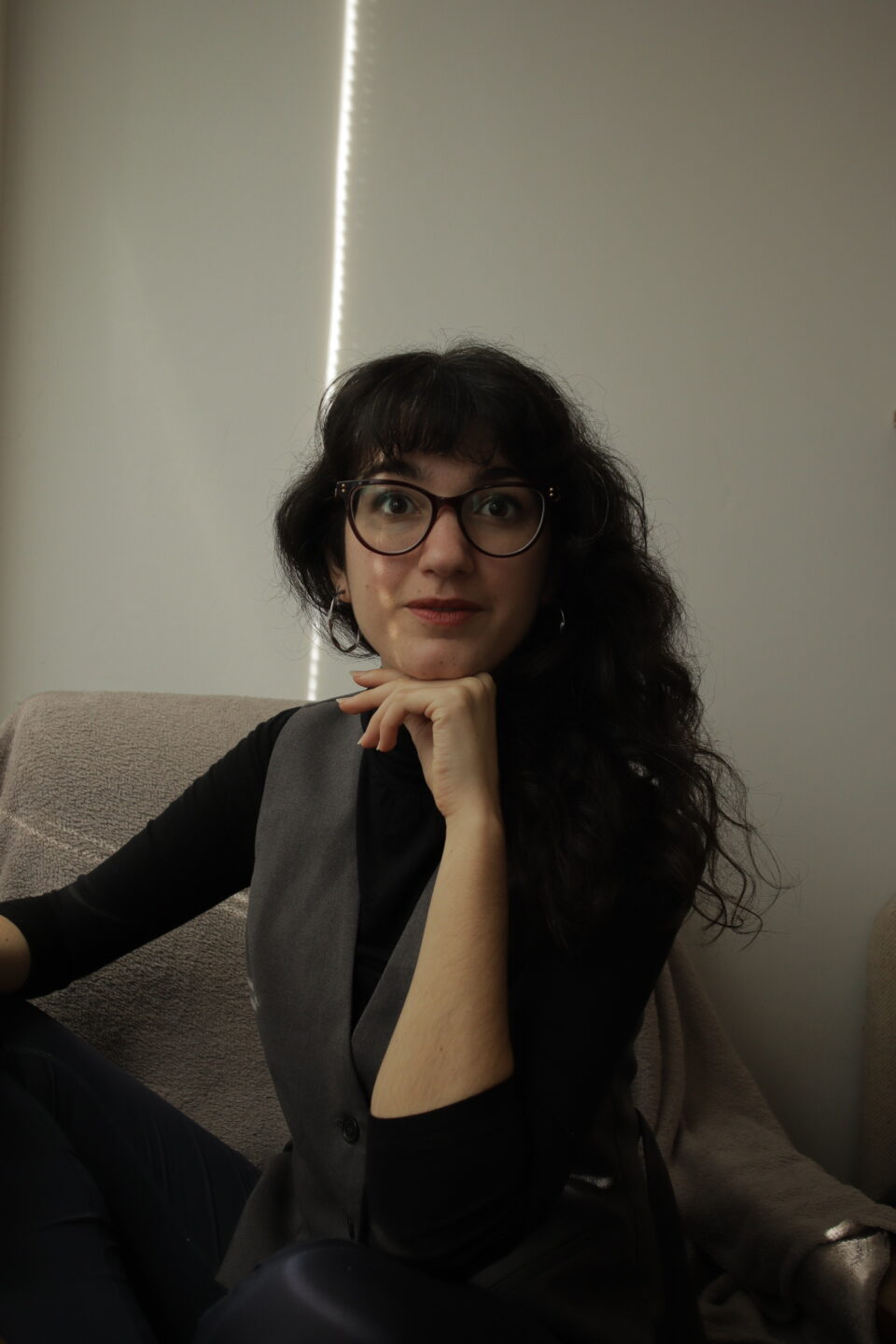
I’m Cristina
I work through spatial storytelling, using materials, textures, symbols and atmospheres to explore themes such as love and loss, marginality and the encounter with the Other.
I work independently and with communities, creating spaces that invite reflection and new forms of presence.

All the project I have worked on has been like planting a seed—dedicated to amplifying the voices of those often left unheard, inviting others to explore stories and perspectives from the margins and beyond.

Discover more about my work
You can explore it through the lens of the Journey section, where I recount the key milestones in my education and my approach to work. Or you can browse the Categories , each dedicated to a specific aspect of my research.
A Journey of constant exploration
Growing up in an environment rich with creativity and artistic expression, I quickly discovered my passion for the arts. From the moment I could grasp a pencil, navigate a computer or capture images, I found myself immersed in creating imaginative projects.
During my formative years in high school, I dedicated myself to studying textile art, where I encountered traditional techniques (serigraphy, weaving, natural dyeing) and digital tools for design and production. This duality—craft and technology, material and screen—will become a constant in my work.

Later my path led me from the shores of Sicily to the streets of Florence, where I pursued my education at the Academy of Fine Arts.
The first year I studied Graphic Art (presses, etchings, monotypes)—a productive “mistake” that trained me in drawing, anatomy, and printmaking. Then I switched to Decoration, a more versatile major where I could experiment with photography, video, sculpture, and performance.
This transformative period allowed me to fully immerse myself in the world of art and continuous learning. Working across different topics gave me clear insights into artistic expression and helped build my vision: I’m drawn to what remains unseen: forgotten presences, marginalised bodies and overlooked narratives.


Outsider inside
A pivotal moment in my journey occurred during a workshop for the project ’68 Rewind, which brought me to San Salvi. There I encountered a vibrant theatre company working within a former asylum complex — a space rich in stories and collective memory.
Their work blends theatre, social engagement and archival research, transforming the space into a cultural laboratory open to the community. The company recognised my creative potential and welcomed me into their process. I gradually became involved in visual documentation, graphic materials, and the curatorial preparation for the exhibition on outsider artist Francesco Romiti, which later became the focus of my thesis.

Working whit them significantly transformed me: deepened my expertise across multiple disciplines and topics such as mental health and outsider art. But more importantly, it ignited the relational dimension of my work, reinforcing the idea that art can activate memory, create shared space and hold collective vulnerability.


Back to School
During my time with the theatre company, my interest in spatial narrative grew — the dialogue between materials, light and architecture, and the way these elements shape how people inhabit a space. This led me to pursue a Master’s in Exhibition Design, where I studied design principles, museology and architectural composition.


During the program I deepened my understanding of how spatial experiences can guide perception, emotion and memory. My thesis focused on the design of a possible museum dedicated to San Salvi, imagining how the former psychiatric hospital could become a place of collective memory, cultural accessibility and community-centered storytelling. The project considered archival materials, site-specific atmospheres and participatory practices to propose a museum that could host exhibitions, performances and public engagement activities.


Haiku – 2018 San Salvi
Crossing Borders
I decided to pursue the dream of exploring new perspectives on culture and community. This decision marked an important turning point, motivating me to leave Florence and embrace international experiences through Erasmus and volunteer programs.

The first and most influential of these was an internship in Casa da Horta, a cultural and environmental association in Porto. Working within a horizontal, non-hierarchical structure gave me a clear understanding of the kind of context where my values and skills thrive.
I participated in a wide range of activities — benefit dinners, debates, ecological actions, workshops and cultural events — and collaborated in the organization, design and communication. I also developed and coordinate events such as Feminism Now, a discussion format dedicated to feminist issues.
Other experiences in Sweden, Slovenia and Spain further strengthened my interest in communal living, activism, collaborative work, sustainable practices, and holistic approaches to design.
Holistic Approach: Approach the project as part of a larger narrative, considering the social, cultural, and environmental contexts in which it exists. This ensures that my work not only resonates aesthetically but also contributes positively to the community.

Park Istra ESC personal project in collaboration with Samuel Blaško
Recently, I completed a training program as a Holistic Life Coach which is further shaping the way I integrate the understanding of the body and emotions. Expanding my ability to work with collective and individual creative processes and transformative accompaniment.

I’m not rooted in a single place or language. I move between countries, mediums, and communities. I bring with me a variety of skills—photography, performance, design, facilitation, coaching—and I apply them based on the context.
My method is listening. My goal is to create spaces—physical, relational, emotional—where people can recognize each other through the challenging and tender work of co-presence.
Spaces where fragility isn’t something to be hidden, but shared. Where the landscape—urban, social, interior—can be collectively reinterpreted, imagining more just and sustainable futures.
Explore my works


If you’re looking for a creative partner, feel free to reach out!
If your projects align with and promote values of environmental sustainability, social inclusivity, and community engagement, working toward creating lasting positive change.